Guides ·
How to care for a semi-solid-state battery: charging, storage, temperature
A large battery for a heavy platform is a serious investment, and its service life depends not only on the chemistry but also on everyday habits. Here are general rules for charging, storage and operation in cold and heat. For exact operating limits of your configuration, always check with the manufacturer.
Is semi-solid-state care different from LiPo care
The core principles are the same as for any lithium-ion technology: avoid deep discharge, overcharge, overheating and mechanical damage. The same safety rules apply to any lithium chemistry, semi-solid-state included — never skip them.
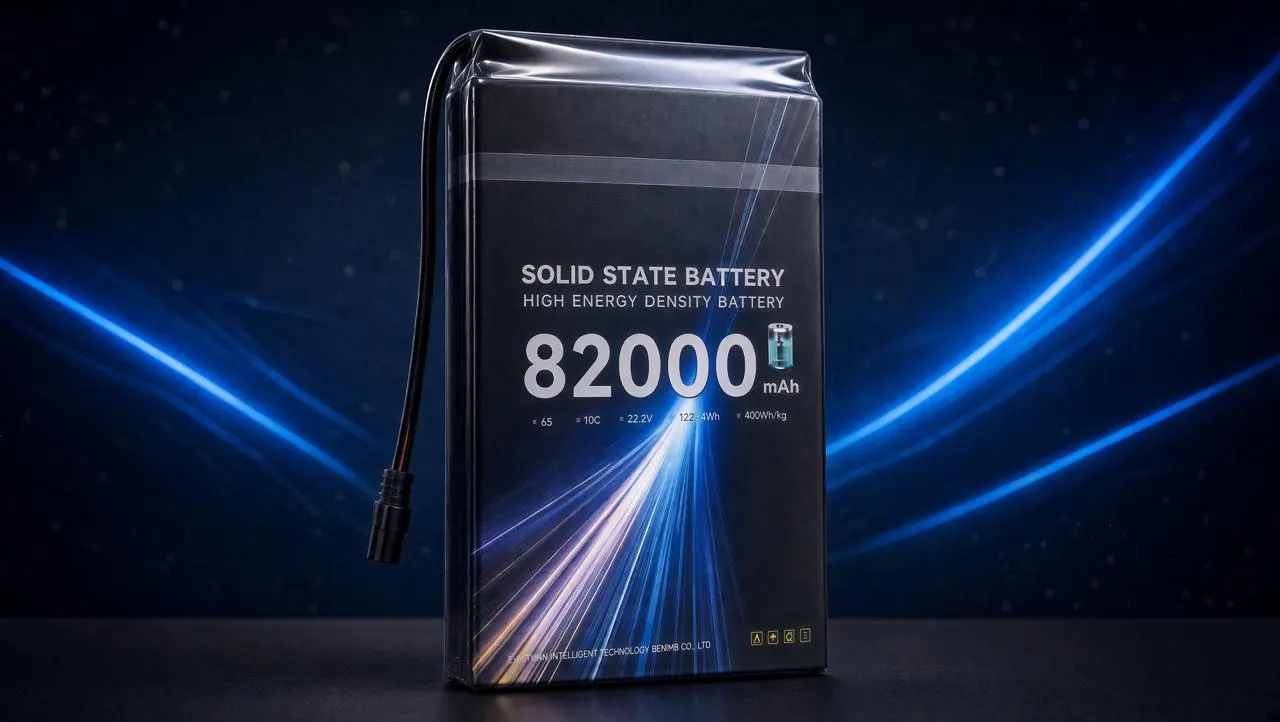
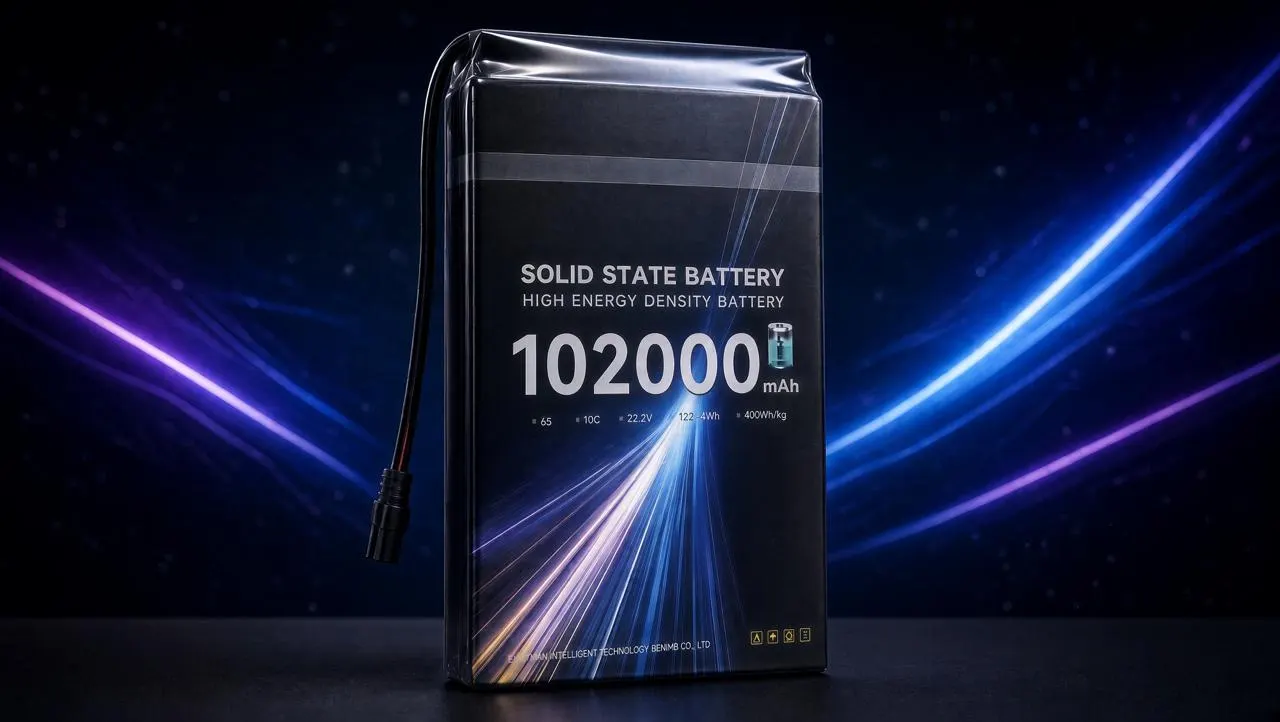
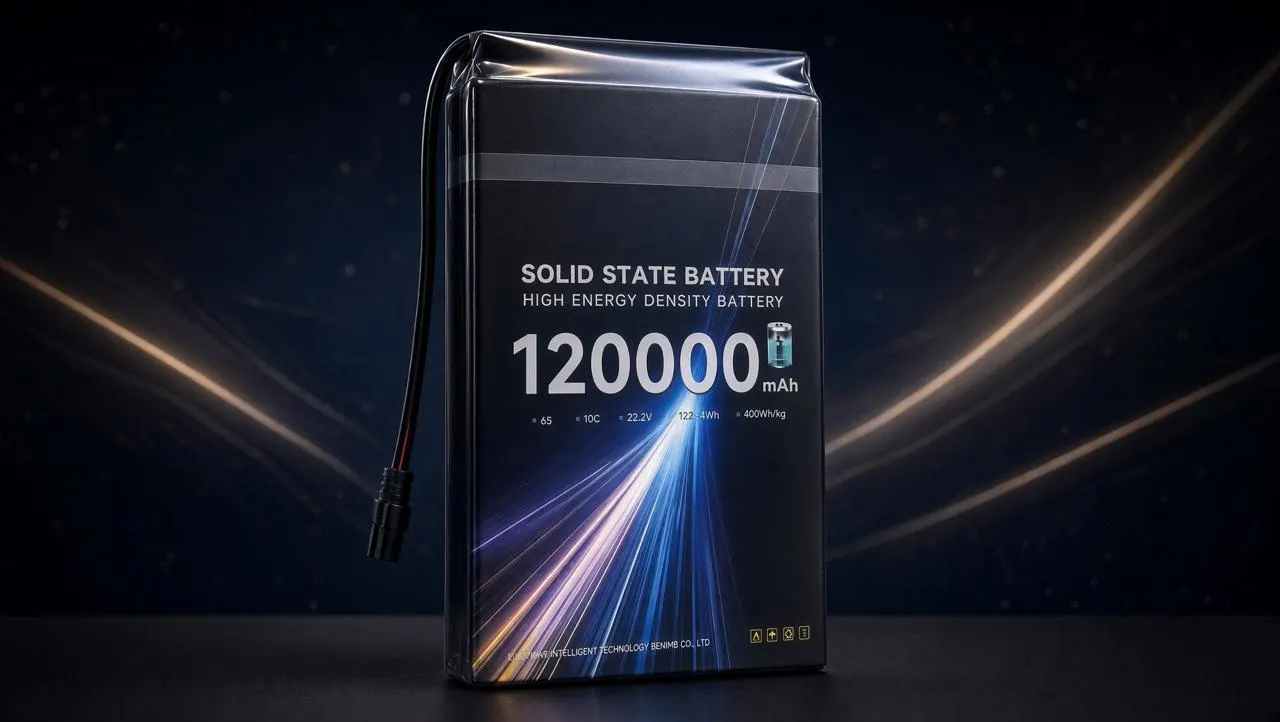
The Pulsar SS82, SS102 and SS120 are built on semi-solid-state NMC at 22.2 V (6S). Use a charger that supports exactly this configuration and the matching charge profile for your build. If you ordered a custom BMS, connector or cable length, charging parameters may differ, and these should be confirmed separately.
How to charge the battery correctly
- Charge only with a compatible charger set to the cell count and chemistry of your battery.
- Never leave a battery charging unattended, and do not charge it on flammable surfaces. Use a non-combustible base and keep the area around it clear.
- Do not charge a damaged, swollen or deformed battery, and do not push it to work one more time.
- Do not start charging straight after a heavy-load flight. Let the pack cool to room temperature first.
- Do not exceed the charge current recommended by the manufacturer for your configuration. Fast charging is convenient, but running at the limit all the time shortens service life.
How to store a battery between flights and long term
For a short break, a dry place out of direct sunlight, away from heat sources and flammable materials is enough. For long-term storage, do not keep the battery fully charged or fully discharged: lithium-ion packs tolerate idle time best at a medium state of charge.
Every few months, check the voltage and the condition of the housing and, if needed, bring the pack back to a medium charge level. Keep the battery in a non-combustible container or case, and separate from fuel, solvents and other hazardous substances. For the exact charge range for long-term storage of your model, check with the manufacturer.
Temperature: what to do in winter and summer
| Conditions | What to do | What to avoid |
|---|---|---|
| Cold | Keep the battery warm until use and let it reach room temperature before charging | Charging a frozen pack; sudden temperature swings |
| Heat | Store in shade in a ventilated place and let the pack cool after a flight | Leaving the battery in a closed vehicle or in direct sunlight |
| Humidity | Store in a dry place and use a protective housing where needed | Condensation after moving from the cold into a warm room |
| Transport | Secure the pack in a container so it cannot knock against other items | Carrying it loose together with tools or metal objects |
What to check before every use
A short inspection before charging and before each flight is a good habit. It takes a minute and helps you catch problems early.
Look over the housing and heat-shrink for cracks, dents, signs of moisture or heating. Check the connector and cable: loose contacts and worn insulation cause extra heat under load. Pay attention to smell, visible swelling and any sudden change in how the battery behaves under load. If anything looks doubtful, take the pack out of service and contact the manufacturer instead of experimenting.
Habits that extend battery life
- Keep a log: date, cycle count and notable events. It makes it easier to notice when a battery starts behaving differently.
- Do not run the pack down to zero. Finish operation with an energy reserve.
- Rotate batteries if you have several, so the load is spread evenly.
- Keep track of the batch: the QR traceability on the pack helps the manufacturer identify which batch a battery belongs to if a question comes up.
Summary and where to get exact guidance
Caring for a semi-solid-state battery comes down to simple things: the right charger, moderate profiles, stable storage, temperature control and regular inspection. It is no harder than with LiPo, and both service life and safety improve.
For custom builds, the operating profile depends on the BMS, the cell configuration and the usage scenario. Message us on WhatsApp with the model or your platform parameters and we will point out what to watch in your case.
Send your parameters