Guides ·
Semi-Solid State vs LiPo: which battery to choose for a heavy drone
LiPo is still the standard for light FPV drones. But once a platform gets heavy and missions get long, energy per kilogram becomes the key parameter. Here is where semi-solid-state wins and where LiPo still makes sense.
What semi-solid-state means
A semi-solid-state battery is a lithium-ion technology in which part of the liquid electrolyte is replaced with a gel-like or solid component. This allows more energy-dense cathodes (such as high-nickel NMC).
In practice it means more watt-hours per kilogram — exactly what determines the flight time of a heavy platform.
Key parameters compared
| Parameter | LiPo | Semi-solid state |
|---|---|---|
| Cell energy density | ≈ 150–200 Wh/kg | 300–400+ Wh/kg |
| Peak current | Very high | Moderate — sized to the platform |
| Cycle life | ≈ 200–300 cycles | 800+ cycles |
| Fire risk | Higher | Lower |
| Best for | Light, fast FPV, short missions | Heavy bombers, long missions, UGVs |
When semi-solid-state pays off
- The platform carries a significant payload and every kilogram counts.
- Range or time in the air matters more than maximum agility.
- There is a hard battery weight limit but you need more energy.
- The battery is reused many times — 800+ cycles lower the cost per sortie.
When LiPo still makes sense
For light, fast FPV drones that need very high peak current for a short time and fly missions of a few minutes, LiPo remains a simple and inexpensive choice.
Conclusion
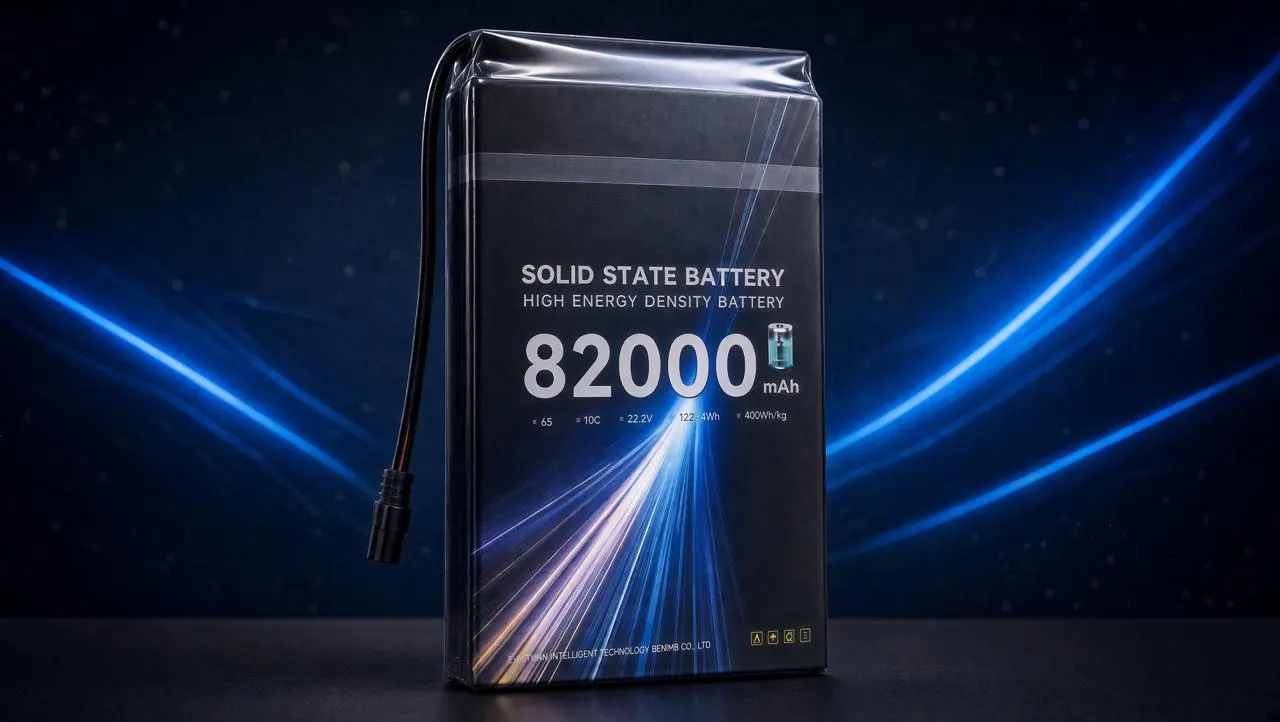
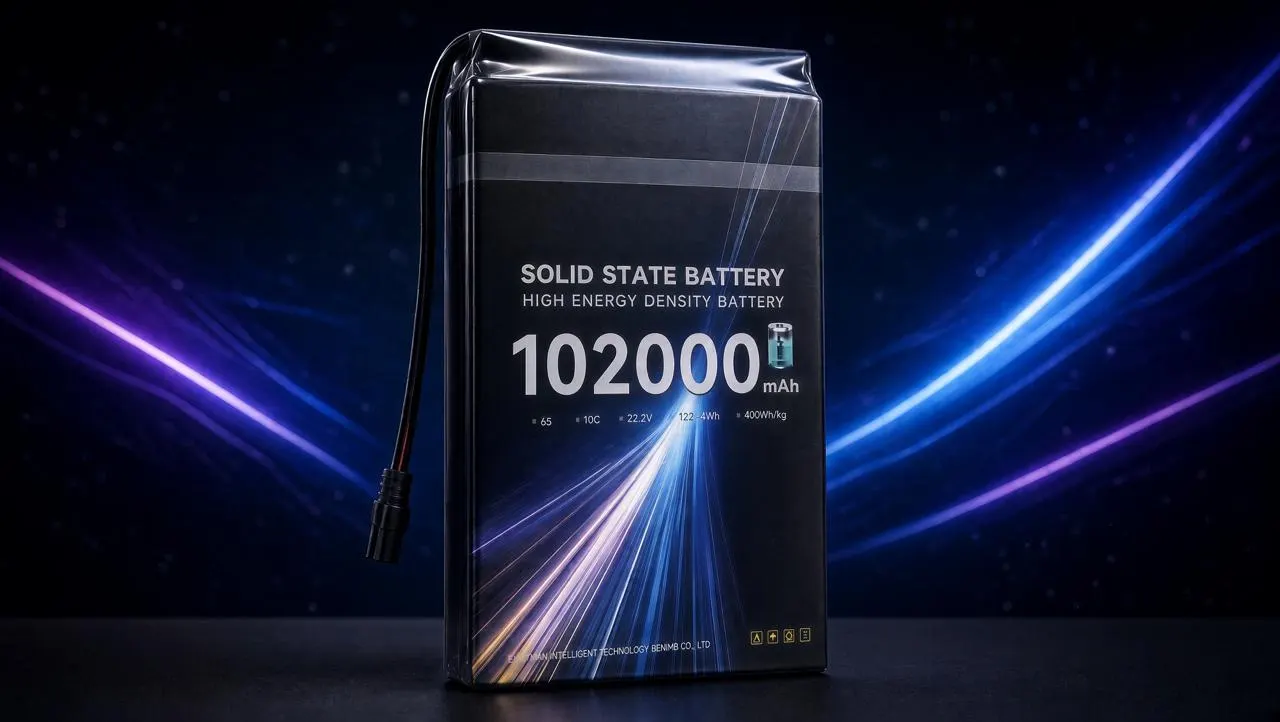
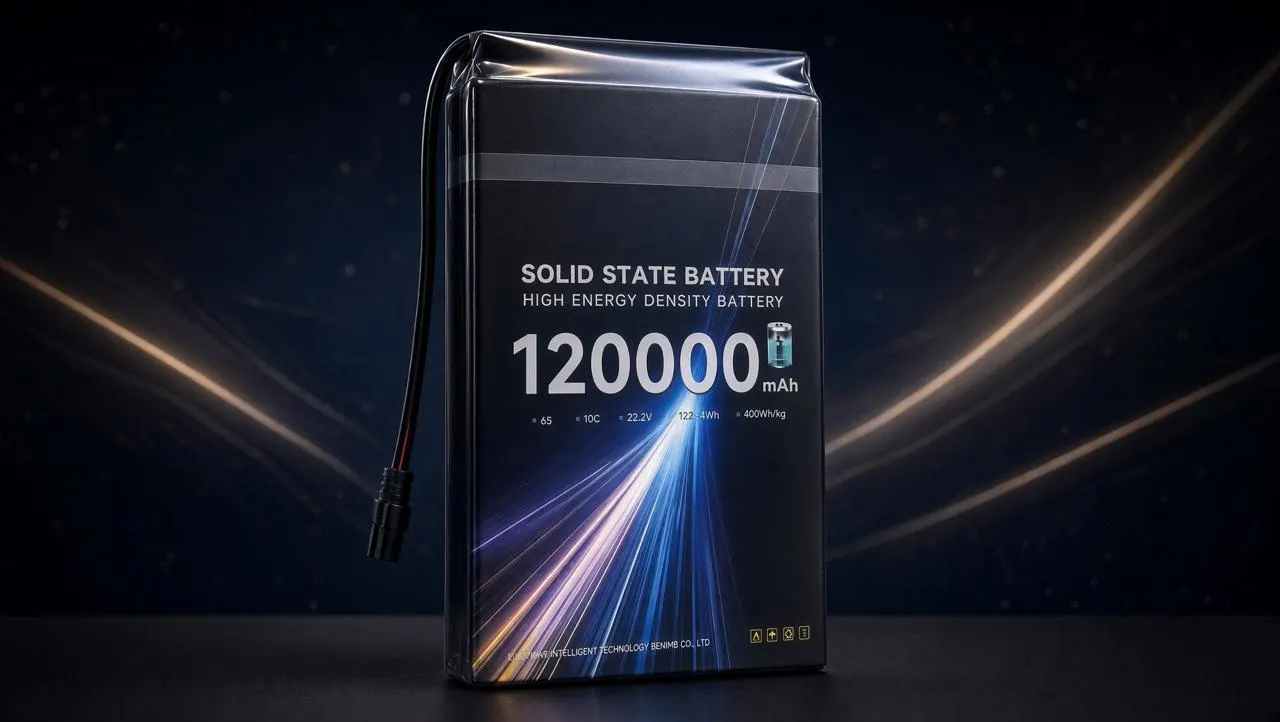
For heavy FPV bombers, hexacopters and unmanned ground vehicles, semi-solid-state delivers noticeably more energy at the same weight. To choose a model for your platform, compare the SS82, SS102 and SS120 in the catalogue or send us your parameters.
View catalogue