Guides ·
Wh/kg and energy density: how to compare drone batteries
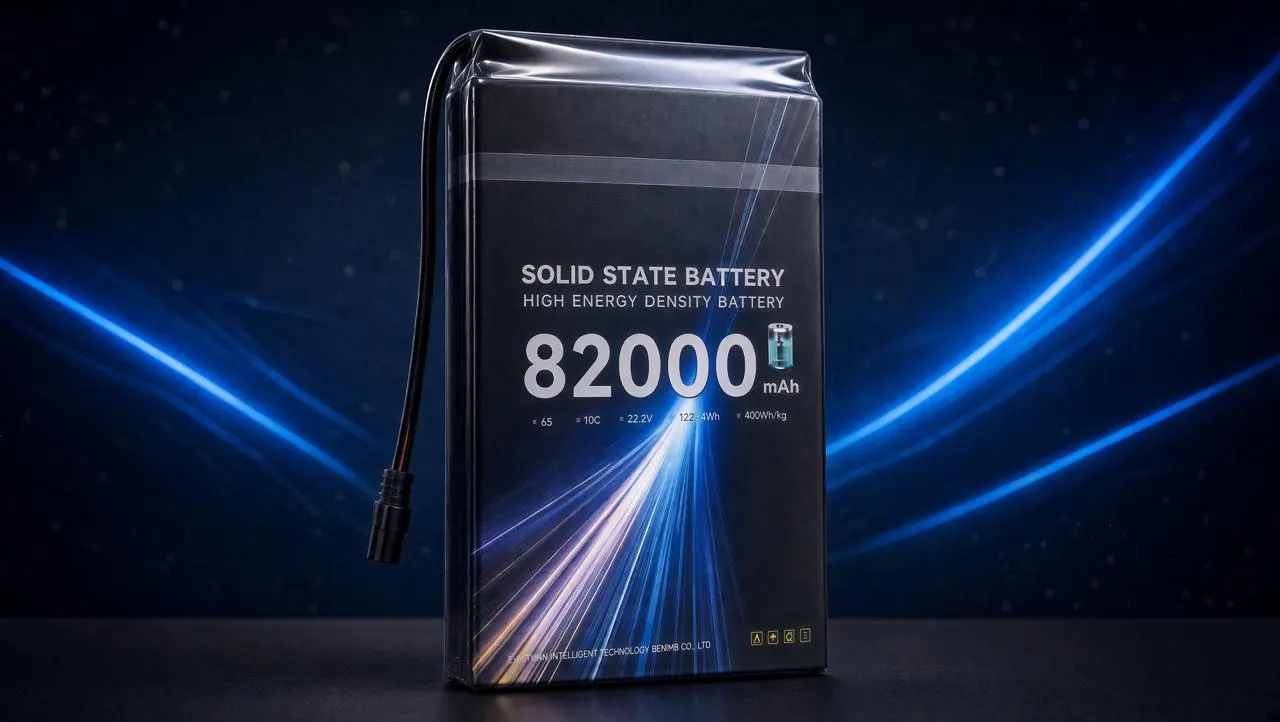
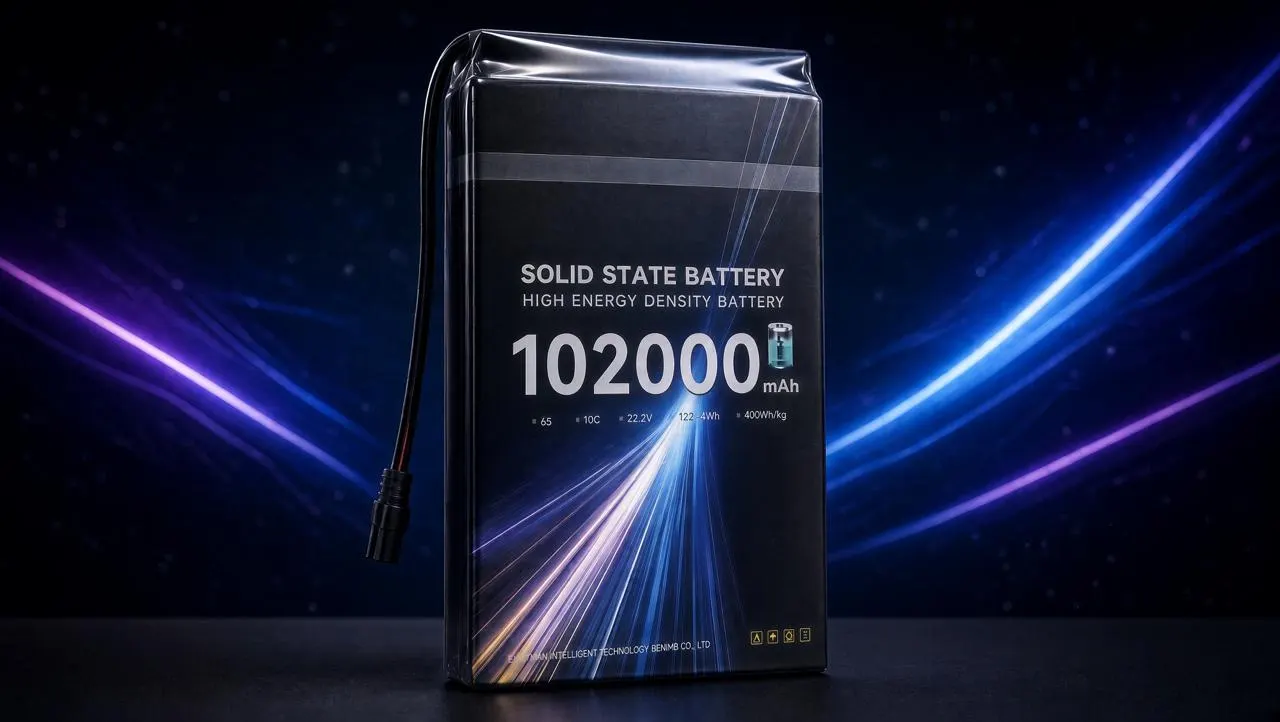
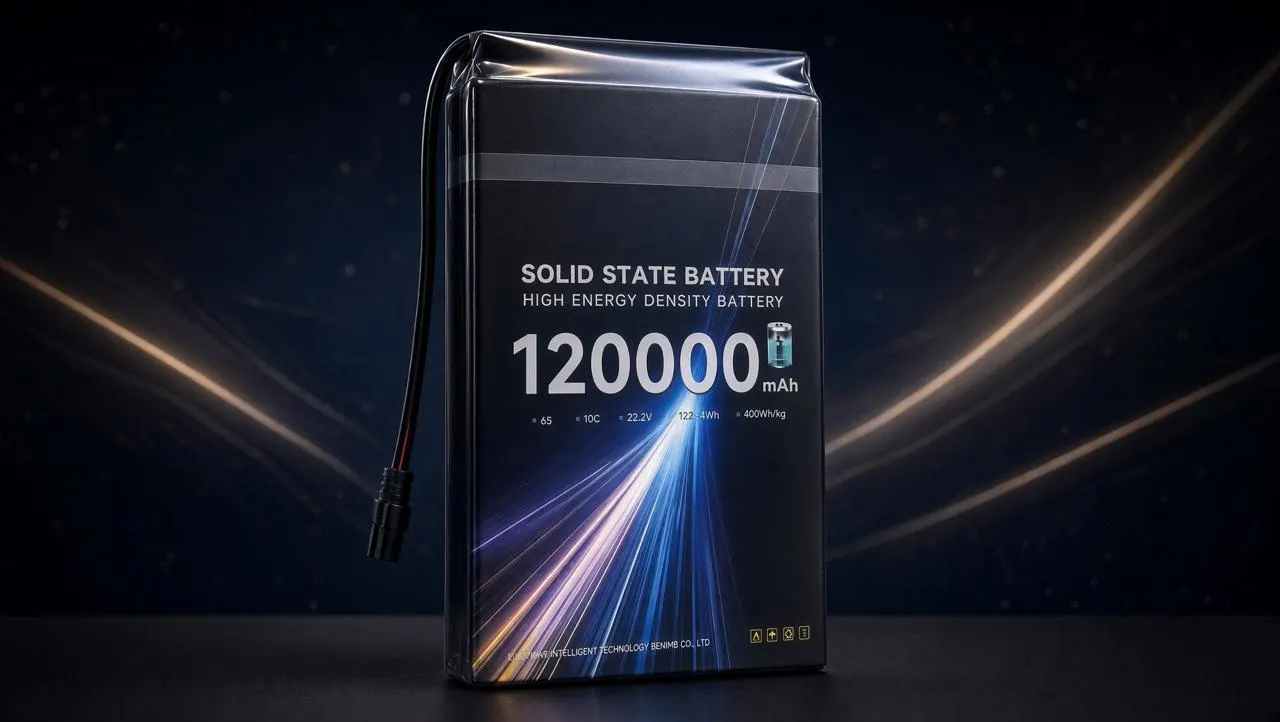
Wh/kg is the most quoted number in drone battery listings, and also the one most often misread. This guide explains what it means, why cell energy density is not the same as the density of a finished pack, and how to compare offers without choosing wrong. Examples come from the Pulsar SS82, SS102 and SS120 technical data.
What is Wh/kg and battery energy density
Specific energy, commonly called energy density, shows how much energy a battery stores per kilogram of its own weight. The unit is watt-hours per kilogram, Wh/kg. The higher the number, the more energy you carry for the same mass, or the lighter the pack for the same energy.
For a drone this ties directly to payload and flight endurance: every kilogram of battery is a kilogram you cannot give to a camera, equipment or extra range. So when people search for "density battery wh kg", they are really asking a practical question: which pack gives more energy at an acceptable weight.
There is also volumetric density in Wh/L. It matters when space in the frame is tight, but drone battery listings almost always mean Wh/kg.
Cell-level vs pack-level energy density
This is the most important thing to know before comparing. A cell manufacturer states the energy density of the cell itself. A finished pack also contains busbars, insulation, a BMS board, a cable, a connector and a housing. All of that adds mass but no energy, so the density of a finished pack is always lower than that of its cells.
That is why the Pulsar catalogue labels the parameter "cell energy density". Pulsar SS82 and SS102 list 380+ Wh/kg at cell-level, and Pulsar SS120 lists 430 Wh/kg at cell-level. This is not a claim about the weight of the whole pack; it describes the cells inside it.
The practical takeaway: when you see "400 Wh/kg" in a listing, find out whether it refers to the cell or to the finished pack. Compare like with like.
How to calculate Wh/kg yourself
- Energy in Wh = capacity in Ah × nominal voltage. For example, 120,000 mAh is 120 Ah, and at 22.8 V that gives 2,736 Wh, as listed for the SS120.
- Do not compare batteries by mAh when their voltages differ: mAh without voltage does not tell you how much energy is inside.
- Pack density = energy in Wh divided by the full pack mass in kilograms, including BMS, cable and connector.
- Take the mass from the datasheet of the finished product, not of the cell or a bare block. For the SS120 that is ≈ 6.8 kg.
- If a manufacturer gives neither mass nor energy, the density cannot be calculated, which is a good reason to ask directly.
SS82, SS102 and SS120 compared using catalogue data
| Parameter | SS82 | SS102 | SS120 |
|---|---|---|---|
| Capacity | 82,000 mAh | 102,000 mAh | 120,000 mAh |
| Energy | 1,820 Wh | 2,264 Wh | 2,736 Wh |
| Weight | ≈ 5.2 kg | ≈ 6 kg | ≈ 6.8 kg |
| Voltage | 22.2 V (6S) | 22.2 V (6S) | 22.8 V (6S) |
| Density (cell-level) | 380+ Wh/kg | 380+ Wh/kg | 430 Wh/kg |
What else to check besides Wh/kg
High density is only one characteristic. For a heavy platform it matters just as much how the battery behaves under current and in the cold. For the SS120 the catalogue gives discharge from −43 to +55 °C and charging from 0 to +55 °C, with a standard charge current of 24 A, up to 60 A. These parameters decide whether the pack fits your use case.
Ask separately about the BMS, connector, cable length and mounting points, because they all affect weight and compatibility. Pulsar offers customisation of these elements and an optional impact-resistant aluminium housing with IP65 protection, but such a configuration changes the mass, so pack density should be recalculated for your specific build.
One more practical point is a fair comparison under equal conditions. Compare packs of the same voltage and class, look at datasheet values rather than marketing slogans, and find out exactly what is included in the stated mass.
Checklist: how to compare drone batteries
- Clarify whether Wh/kg refers to the cell or to the finished pack.
- Work out the energy in Wh, not just the capacity in mAh.
- Find the full mass including BMS, cable and connector.
- Check temperature limits separately for discharge and charging.
- Match the dimensions to the space in the frame and the platform balance.
- Ask about BMS and connector customisation for your equipment.
- For your configuration and charging modes, confirm the details with the manufacturer.
Help choosing by energy and weight
If you want to compare the SS82, SS102 and SS120 for your own platform, message us on WhatsApp. Tell us the platform mass, motor type, required energy reserve and operating conditions, and we will suggest a model and configuration. Prices start from 40,000 UAH (about $890) for the SS82, from 50,000 UAH (about $1,110) for the SS102 and from 60,000 UAH (about $1,340) for the SS120.
Send your parameters