Guides ·
How to choose a battery for an FPV bomber: voltage, capacity, current and weight
A poorly matched battery means either dead weight or voltage sag at the worst possible moment. These are the parameters to define before you order.
1. Voltage (cell count)
The voltage must match the power system: motors, ESCs and electronics. The most common configuration for heavy platforms is 6S — 22.2 V nominal. Higher voltage at the same power means lower current and lower losses in the wiring.
2. Capacity and energy
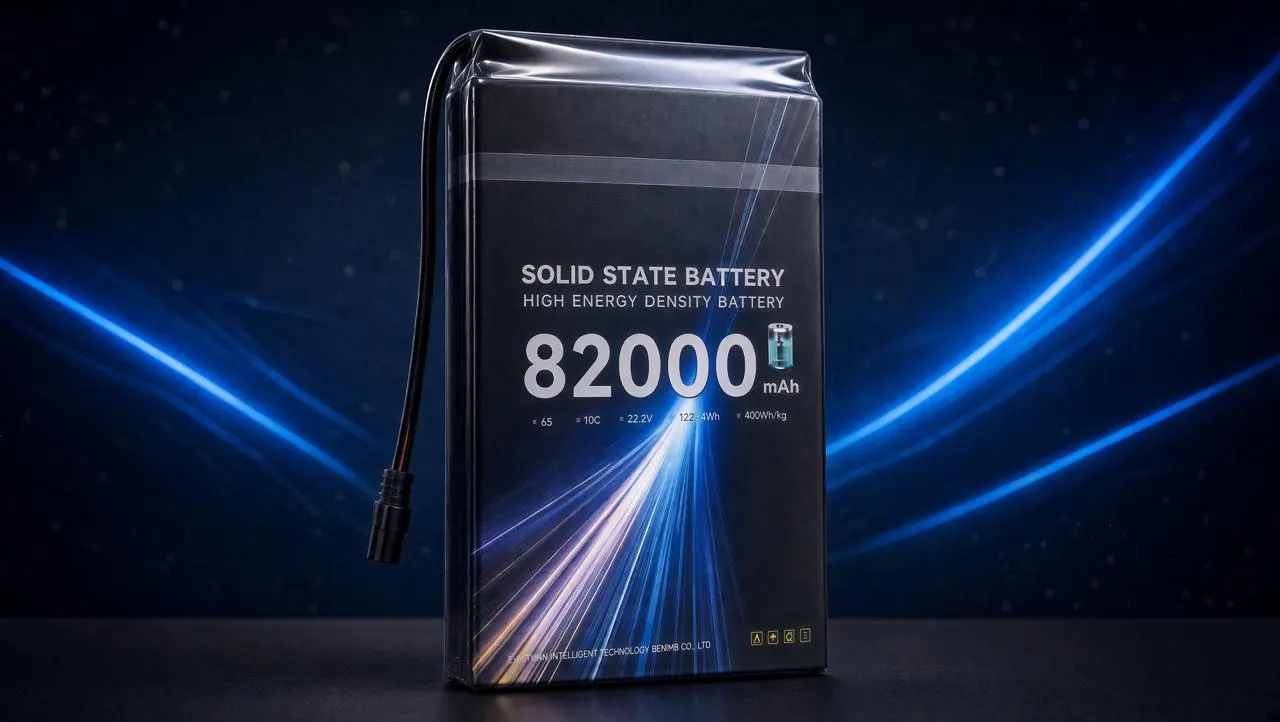
Capacity in mAh only makes sense together with voltage. Compare energy in watt-hours: Wh = Ah × V. For example, SS82: 82 Ah × 22.2 V ≈ 1,820 Wh. Watt-hours determine how long the platform stays in the air.
View catalogue3. Discharge current
Determine the platform’s average and peak current — at take-off, during manoeuvres and at full payload. The battery must deliver the peak current with margin, otherwise voltage will sag and the cells will overheat.
4. Weight and dimensions
A bigger battery does not always mean a longer flight: extra weight increases consumption. The optimum is where the gain in energy clearly exceeds the gain in weight. Check that the pack physically fits the bay and does not shift the centre of gravity.
5. Connector, BMS and housing
- The connector is rated for your platform’s peak current.
- BMS (battery management system) protects against over-discharge, over-charge and overheating.
- Housing: soft pack for minimum weight or an IP65 aluminium case for harsh conditions.
- Batch marking makes fleet tracking and maintenance easier.
What to send us for a recommendation
- Platform and take-off weight
- Power system voltage
- Average and peak current
- Target flight time or range
- Weight and size limits
- Connector type and operating conditions